The exhibition price list is available by clicking on this link below.
Where Colours Become Space and Paintings Become Inner Landscapes
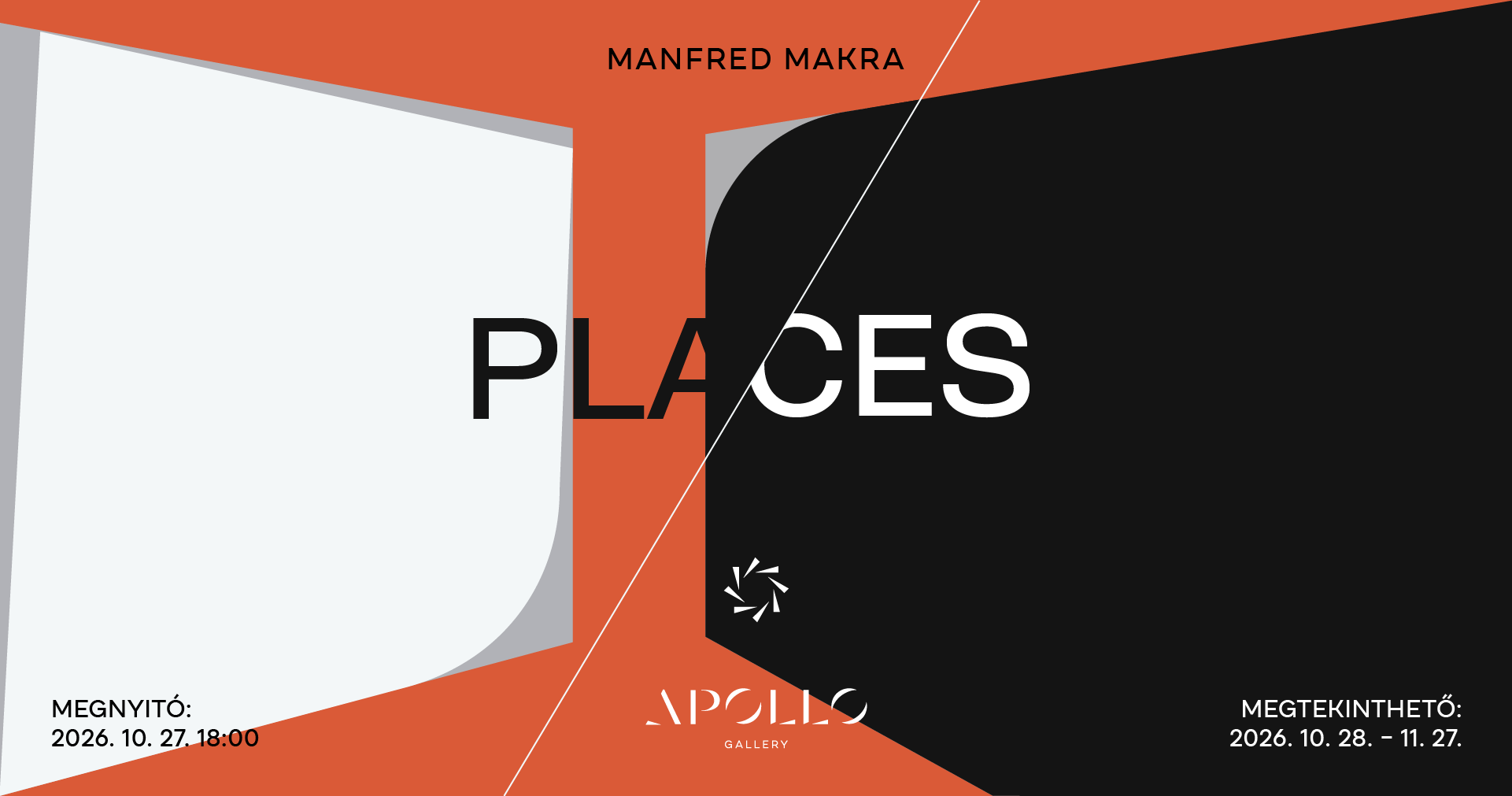
Some paintings tell stories; others open a gateway to another world. Manfred Makra’s paintings belong to the latter. Delicately layered fields of colour, geometric forms and almost imperceptible transitions give rise to inner landscapes that exist beyond geographical coordinates. These are places that come into being through the encounter between the painting and the viewer.
For more than four decades, the Austrian artist has devoted himself to the development of a distinctive pictorial universe. His work is rooted in the traditions of twentieth-century geometric abstraction, Concrete and Constructive art, and Colour Field painting, while enriching the intellectual legacy of European modernism with the sensibilities of Far Eastern aesthetics and the possibilities of contemplative visual experience.
A defining turning point in Makra’s artistic development was his encounter with the Italian painter Antonio Calderara, which marked his decisive turn towards abstraction. In Calderara’s paintings, geometric order unfolds through a delicate equilibrium of light, colour and silence. This sensibility continues to resonate throughout Makra’s work, yet has evolved into a profoundly individual and deeply personal pictorial language.
His paintings enter into dialogue with the legacy of such masters of twentieth-century abstraction as Piet Mondrian, Josef Albers and Mark Rothko. There is also a significant Hungarian connection to his artistic practice: Makra shared a close personal friendship with Tamás Konok, one of the foremost representatives of Hungarian geometric abstraction. Their work reveals a shared sensitivity to line, colour and geometric order, together with a conviction that even the simplest pictorial means can convey extraordinary intellectual and emotional complexity.
In Makra’s paintings, colours take on a life of their own, opening up new dimensions of space upon the flat surface. Paint, frequently applied in twenty to twenty-five layers, together with delicate translucent glazes, lends the pictorial surface an extraordinary sense of depth. Colours appear to advance and recede, boundaries dissolve, and the two-dimensional plane is almost imperceptibly transformed into a spatial experience. Although his compositions emerge from carefully conceived structures, intuition plays the leading role in his choice of colours. Just as one note suggests the next to a composer, so the first colour in Makra’s paintings gives rise to the possibilities of those that follow. From these evolving relationships emerge tensions and harmonies, recalling Antonio Calderara’s notion of the friendship of colours.
The PLACES exhibition also explores the relationship between space and time. In Makra’s paintings, lines and fields of colour form a living, constantly shifting constellation of relationships. The rhythm of the compositions, the repetition of geometric elements and their subtle variations evoke a delicate balance between change and permanence. This approach finds particularly eloquent expression in the Time Field Line Space series, whose very title brings together the fundamental concepts underpinning the artist’s practice. Minute variations between individual compositions generate new spatial relationships and depths, while the works within the series coalesce into a shared visual rhythm. Here, space becomes inseparable from the temporal experience of contemplation: as the eye travels across the surfaces, forms gradually reveal ever-changing relationships and correspondences. Painting thus becomes a remarkable meeting place of time, transformation and perception.
Equally significant is the spiritual dimension of Makra’s paintings. Central to his thinking is the tradition of Eastern Christian icons, in which the image serves as a passage between the visible and the invisible. He also approaches this idea through the lens of contemporary image philosophy, particularly in the spirit of Gottfried Boehm’s iconic turn, which recognises the image as possessing an autonomous power to generate meaning. The painting reveals itself as a spiritual space, a threshold between the visible and the unseen, where the viewer’s attentive and interpretative presence contributes to the unfolding of its meaning.
Japanese art and aesthetics have likewise left a profound imprint on Makra’s pictorial world. The austere stage settings of Noh theatre, the interplay of forms across the flat surfaces of kimonos, and the principles of rhythm, emptiness and completeness achieved through the utmost economy of means all find echoes in his work. Within this restrained yet extraordinarily sensitive visual language, silence acquires an almost tangible presence, while empty space becomes a realm of infinite possibility.
PLACES invites visitors to step beyond the hurried rhythms of everyday life and allow themselves the time to truly see. Through slow, attentive contemplation, Makra’s paintings gradually disclose their rich complexity, becoming spaces in which the viewer’s own memories, emotions and thoughts may resonate. In this intimate encounter, the work of art offers the possibility of recognising something of ourselves. As the artist reflects in his thoughts written for the exhibition, what we seek in a work of art is often nothing other than that place within ourselves which we have lost amid the noise of the world.